Konvex Growth Blog
A Website That Sells vs One That Just Sits There

Quick answer: A website that sells explains what you do within five seconds, asks for one clear action, loads fast on phones, answers common questions, shows real proof such as photos and reviews, and makes buying or booking effortless. If your site gets visits but no enquiries, one of these six is usually missing.
Two websites can look equally good and get very different results. One brings in calls and orders, and the other collects compliments. The difference usually has little to do with design and a lot to do with the six things below.
1. Is it obvious what you do in five seconds?
A visitor lands on your homepage. Within five seconds, can they tell what you offer, who it's for and where you are? "Welcome to our world of excellence" tells them nothing. "CrossFit and HIIT gym in Sector 52, Gurugram" tells them everything they need.
2. Is there one clear next step?
A site that sells asks for one action and makes it easy: book a trial, order now, get a quote, or message on WhatsApp. A site that sits there offers ten links and lets people wander off. On the Gym 52 concept site built by Konvex Growth, nearly every page leads to the same place, booking a free trial.
3. Is it fast, especially on a phone?
If a page takes more than a few seconds, many visitors leave before it loads, so speed is a sales problem as much as a technical one. That's why we build sites to load almost instantly.
A textile wholesaler in Surat whose buyers browse on mobile data, for example, loses orders if the catalogue is slow to load.
4. Does it answer questions before they're asked?
Prices, or at least a starting point. Timings, location, delivery areas and how long things take. Every question the site leaves open is a reason to go and check a competitor.
5. Does it prove you're real?
Real photos of your work, your team and your premises help, along with reviews, testimonials and examples of past projects. Stock photos and vague claims make people cautious.
6. Is buying or booking effortless?
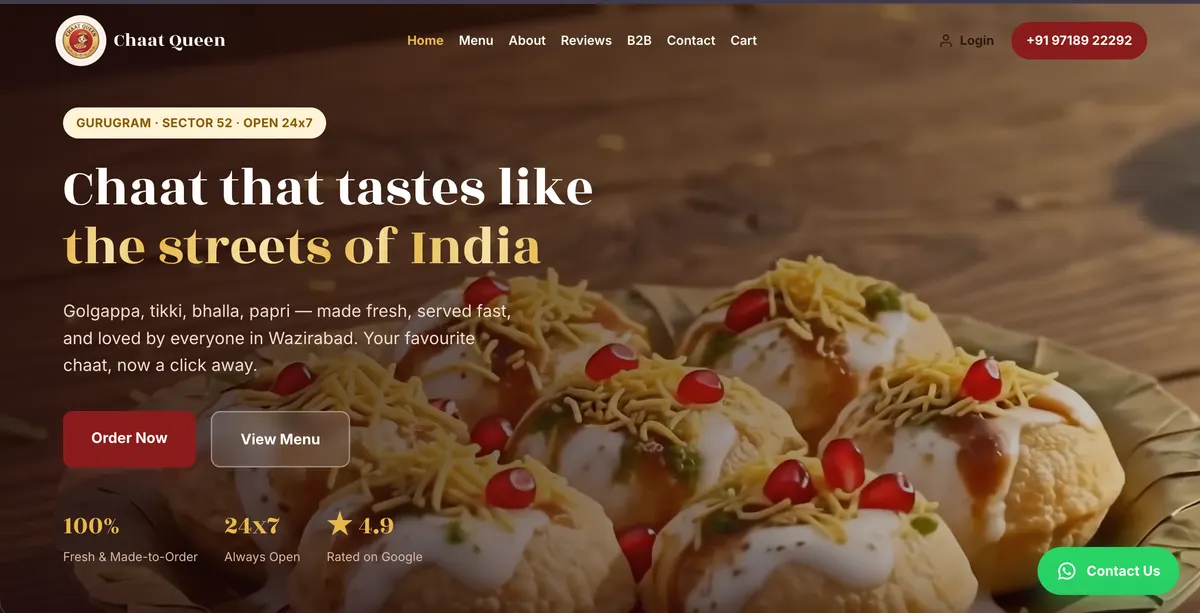
Every extra form field, reload or click loses people. For Chaat Queen's online store, we built a cart that never reloads the page and kept checkout short, because a hungry customer won't wait.
A quick check you can do now
Open your own website on your phone and ask:
- Can I tell what this business does in five seconds?
- Is the main action obvious on every page?
- Did it load quickly?
- Are prices, hours and location easy to find?
- Are there real photos and reviews?
- Could I buy or book in under a minute?
Each "no" is worth fixing before you spend more money bringing people to the site.
Frequently asked questions
What is a good conversion rate for a small business website?
It varies widely by industry and traffic source, so compare your site against its own past months rather than a general benchmark. More enquiries from the same amount of traffic means it's working.
Should my phone number be on every page?
Yes, ideally as a button people can tap to call on mobile, plus WhatsApp if your customers prefer it.
Do I need a full redesign to fix this?
Often not. Fixing these six points on an existing site usually brings most of the improvement.
If your site gets visits but few enquiries, we'll review it for free and tell you what to fix first.